
Benign conditions
Radiotherapy for benign conditions
Non-invasive, low-dose radiotherapy treatment for painful conditions of the hands, feet and joints, and for stubborn inflammatory skin conditions, including Dupuytren’s contracture, Ledderhose disease, plantar fasciitis, osteoarthritis, eczema and psoriasis, keloid scars.
No GP referral needed · Treatment at Clatterbridge Private Clinic and Theralife
Low dose
A fraction of the dose used in cancer treatment
Non-surgical
No cutting, no anaesthetic, no sedation
About 15 minutes
A typical appointment, with around a minute of treatment
Straight back to normal
Drive yourself and return to work the same day
Treatment for benign conditions
Radiotherapy isn’t only used to treat cancer. Given to patients by a specialist at a much lower does, it can ease pain and slow the progression of a number of long-standing conditions. A great option for those who have been told surgery is the only remaining option, or that nothing more can be done. Radiotherapy for these conditions can provide relief through a non-invasive and non-surgical route, which can minimise recovery time.
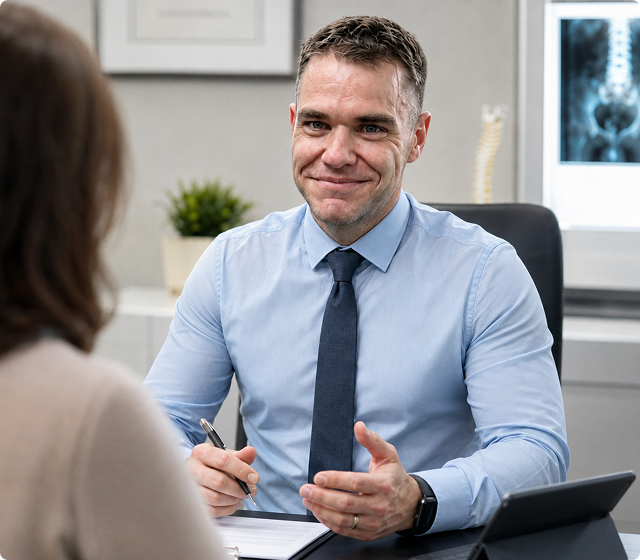
I trained in benign radiotherapy through the RTABC Academy, and I am one of a very small number of clinicians in the UK offering this treatment.
One of very few UK clinicians offering this treatment
I trained in benign radiotherapy through the RTABC Academy, and I am one of a very small number of clinicians in the UK offering this treatment.
RTABC Academy trained
Low-dose radiotherapy for benign conditions:
how it works
Most people associate radiotherapy with cancer treatment. But the same technology, at a fraction of the dose, can be used to treat benign, non-cancerous conditions. This innovative treatment is not widely available in clinics throughout the UK but has been studied and use internationally for years. Many patients have not been offered it before, as it’s not overly common in the UK and there are so few people that specialise in the treatment.
Dose comparison
Illustrative comparison, not to scale. Your dose is confirmed at consultation.
The principle is straightforward, and it can be a very effective treatment for many long-standing and painful conditions. Low-dose radiotherapy calms the overactive cells driving the thickening, inflammation or pain, which can slow a condition’s progress and reduce discomfort. There’s no cutting, no anaesthetic and no long recovery period. Each appointment takes minutes, and you, in most cases, walk out and carry on with your day.
If you arrange an initial consultation with me, I will be able to review your medical history, symptoms and previous treatments and let you know if this treatment is suitable for you and your condition.
Conditions I treat
I treat a number of benign conditions with low-dose radiotherapy, which
fall into four main groups:
thickening and contracture, painful joints,
tendons and soft tissue, inflammatory skin conditions, and
scarring and
growth conditions. More detail on each of the specific conditions below.
Thickening and contracture
Dupuytren’s contracture
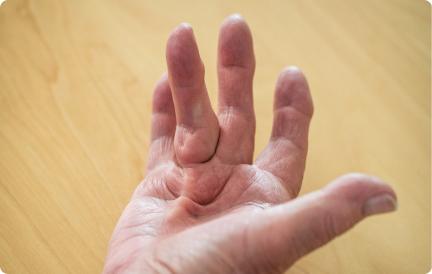
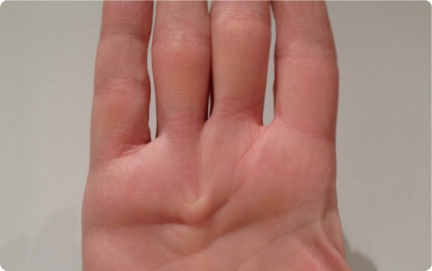
Dupuytren’s is the thickening of the connective tissues, or fascia, in the palm and fingers, that gradually pulls the fingers inwards and prevents them from straightening. Treated in its early phases, e.g. contracture less than 10-20 degrees/nodules and cords present, low-dose radiotherapy can help delay and try to prevent further progression, thereby preserving hand function.
How it helps
- Can help delay/try to prevent progression/finger contracture
- Reduces pain and discomfort
- Enhance and preserve hand mobility without invasive surgical procedures
Ledderhose disease
Painful nodules in the arch of the foot caused by benign thickening of the connective tissue in the foot. I can provide low-dose radiotherapy to soften and shrink the foot nodules, slowing progression and relieving the pain. Surgery on the sole of the foot can be difficult to recover from and the condition often returns afterwards, so for many people radiotherapy is worth considering first.
How it helps
- Shrinks the nodules to relieve pain and discomfort
- Enhanced mobility and improved comfort when walking, running or standing
- Prevention of disease progression
Painful joints, tendons and soft tissue
Osteoarthritis
Osteoarthritis develops as the cartilage cushioning a joint gradually wears down, leaving pain, stiffness and swelling. Most common in the hands, knees, and hips. It is very common, and many people manage it with painkillers, exercise and eventually joint replacement when appropriate. However, for those who are struggling with pain but are not yet ready for surgery, low-dose radiotherapy can offer relief. It cannot rebuild worn cartilage or reverse changes, but it can reduce pain significantly.
How it helps
- Reduces inflammation in affected joints to reduce pain
- Makes the joints considerably more comfortable for increased mobility
- Improves comfort, mobility, and quality of life when other treatments have provided limited relief
- Can be an alternative option when surgery is not possible, or patients wish to avoid/delay surgery
Plantar fasciitis
Plantar fasciitis causes pain in the heel and along the arch of the foot. Caused by irritation and degeneration of the thick band of tissue running along the sole of the foot. Some people can manage with stretching, supportive footwear, physiotherapy or steroid injections, but for others the pain persists, and they can live with it for many years. This is where low-dose radiotherapy can help, when other treatments have been unsuccessful. It targets the inflammation causing the pain, with the aim of reducing it enough to walk and stand comfortably again. .
How it helps
- Rapid reduction in chronic heel pain and inflammation
- Helps improve mobility and allows you to walk and stand comfortably again
- Provides lasting relief where other treatments have failed
Tendonitis
Tendons attach muscle to bone, and when one becomes irritated or starts to break down with repeated strain, the result is pain that can persist for months or years. It’s common at the elbow, tennis elbow and golfer’s elbow, as well as in the shoulder, the Achilles tendon and around the knee. Most cases improve with rest, physiotherapy and time, but some stubborn cases do not which can affect what you’re able to do.
How it helps
- Targets the inflammation to reduce pain
- Allows for great mobility and the aim for you to use the limb normally again
- Can provide relief when other treatments have not been effective
Bursitis
A bursa is a small fluid-filled sac that cushions the point where a tendon or muscle passes over bone. When one becomes inflamed it causes localised pain and tenderness, often worse on movement or when lying on the affected side. The shoulder, hip and elbow are the most commonly affected areas.
How it helps
- Targets the inflammation to reduce pain
- Allows for great mobility and comfort when moving or laying on the affected area
- n provide relief when other treatments have not been effective
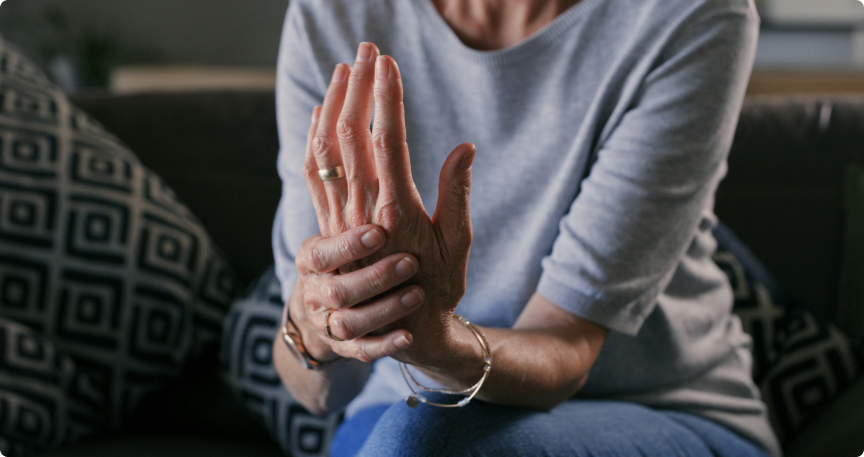
Inflammatory skin conditions
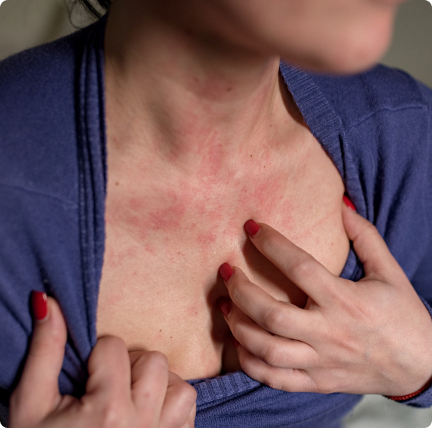
Eczema
Eczema is a skin condition that causes dry, itchy and inflamed areas of skin that can sometimes crack or weep fluid. Most people are treated with emollients, steroid creams, or in severe cases light therapy and medication. However, some people face treatment resistance, with limited or no success from traditional therapies. Low-dose radiotherapy can therefore be an effective solution for relieving pain, itchiness and discomfort.
How it helps
- Calms the inflammation in the skin to reduce pain and itchiness
- Slows rapid skin turnover to reduce scaly patches
- Can provide effective relief where other treatments have not
Psoriasis
Psoriasis is an inflammatory autoimmune disease that causes scaly plaques where skin cells are produced far faster than the body sheds them. It commonly affects the elbows, knees, scalp, hands and nails, and it can be sore as well as itchy. Creams, light therapy and systemic medication help most people, but some areas can prove remarkably persistent, and areas such as the palms and soles are particularly difficult to treat.
How it helps
- Targets overactive cell turnover to reduce scaly patches
- Reduce inflammation to relieve pain and itchiness
- Can provide effective relief where other treatments have not
Scarring and growth conditions
Keloid scars
A scar that overgrows the original wound, becoming raised, firm and sometimes itchy or painful. Keloids can follow surgery, injury, piercings or acne, and are notoriously prone to returning after removal.
How it helps
- Given shortly after the keloid is surgically removed
- Reduces the chance of it growing back
- Targets the overactive scar-forming cells
Pigmented villonodular synovitis (PVNS)
PVNS is a benign but persistent condition in which the lining of a joint thickens and overgrows, causing swelling, pain and restricted movement. It is most common in the knee or hip and has a tendency to come back after surgical removal, so radiotherapy is used alongside surgery to reduce that risk.
How it helps
- Used after surgery to prevent PVNS from returning
- Can be used when total surgical removal is not possible
- Reduces the chance of pain and swelling returning for enhanced mobility
Heterotopic ossification
Heterotopic ossification is the formation of bone in soft tissues, where it usually shouldn’t form. It typically occurs after hip surgery, a serious injury, a spinal cord injury or after surgery for PVNS. It can lead to significantly reduced movement in the affected joint. Low-dose radiotherapy can therefore be used to prevent it in people of high risk or alongside surgery to remove it.
How it helps
- Can be used in those who are high-risk to prevent heterotopic ossification from occurring
- Used alongside surgery when removing it to prevent it returning
- Highly effective at reducing severe, disabling bone fusion
How the treatment works
Three straightforward stages, from your first conversation with me through to follow-up.
01
Consultation
I’ll talk through your symptoms and how long you’ve had them, I’ll examine the area, and we’ll go through whether radiotherapy is likely to help. If I don’t think it will, I’ll tell you, and where possible I’ll suggest what might.
You do not need a GP referral for benign conditions treatment — feel free to reach out directly.
02
Treatment
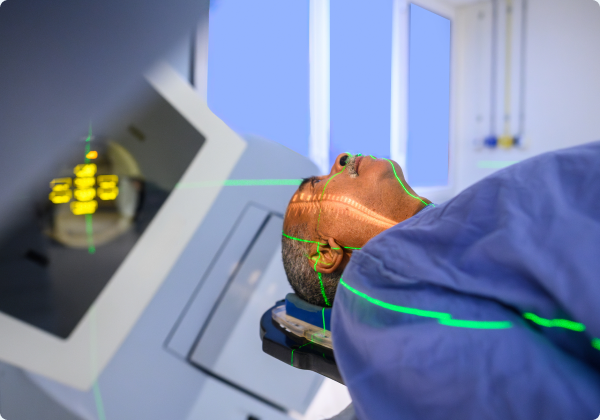
Treatment is usually given as a short course of daily sessions (dependent on your specific condition). Each appointment takes about fifteen minutes, and the treatment itself lasts around a minute, most of the appointment is getting you positioned correctly. There’s no anaesthetic and no sedation required. You can drive yourself, and you can go straight back to work afterwards.
- No anaesthetic and no sedation
- You can drive yourself to and from treatment
- You can go straight back to work afterwards
03
Follow-up
I’ll see you again after treatment to check how you’re getting on. Improvement is usually gradual rather than immediate, it can take several months to see the full effect, which is why I will continually check in on your progress.
- Progress monitored at follow-up
- Improvement is usually gradual
- Full benefit can take several months

The benefits of low-dose radiotherapy for benign conditions
Non-invasive
No surgery and no anaesthetic. No painful surgery required, and there’s no operation to recover from.
Quick appointments
Just a few minutes each visit, over a short course of treatment minimising disruption to your daily life.
Straight back to normal
There’s no downtime. You can drive, work and walk as usual on the same day.
Best used early
For Dupuytren’s and Ledderhose in particular, treating early gives the best chance of slowing things down before they become disabling.
An option when others have been exhausted
Many of the people I see have already tried everything else, or been told surgery is the only route left. This provides an alternative, non-invasive route.
Frequently asked questions
If your question isn’t answered here, send me an email and a member of my team will come back to you.
Do I need a referral?
No, you do not need a GP referral for my benign conditions treatment. Patients are welcome to contact me directly to arrange an initial consultation. During the consultation, I will review your medical history, symptoms and previous treatments to determine if low-dose radiotherapy is the right treatment for you.
If you would like to be referred for treatment with me, or would like to refer a patient, I do welcome referrals from GPs, dermatologists and other healthcare professionals.
Is the treatment painful?
Low-dose radiotherapy treatment is not painful. You shouldn’t feel anything, and most patients describe the experience as being similar to getting a scan. You simply sit or lie still for a short period while the machine does its work, which is over in a matter of minutes. Some patients may feel tired after treatment, but you won’t feel any pain or discomfort during the treatment itself.
Are there side effects?
The doses used for benign conditions are far lower than those used in cancer treatment, and most people have few or no side effects. Some notice mild dryness, redness or itching of the skin in the treated area, which usually settles on its own. I’ll go through the risks properly with you at your consultation, including the small long-term risks, so you can make an informed decision.
How long before I notice a difference?
It’s usually gradual. Some people notice a change within weeks, but it can take several months to see the full benefit, and improvement often continues over that time.
Can I self-fund, or is it covered by insurance?
I welcome both self-funding and insured patients. I can go through pricing for treatment with you during our initial consultation. Insurance coverage is considered on a case-by-case basis, and you may need to confirm if it’s covered with your provider after the consultation.
Which clinic will I be treated at?
I provide benign conditions radiotherapy treatment at both the Clatterbridge Private Clinic and Theralife.
Book a consultation
If you’d like to know whether this treatment might help you, send me an email with a little about your condition and how long you’ve had it, and a member of my team will come back to you.

Dr Ian Lampkin
Consultant Clinical Oncologist
Liverpool · Wirral · Manchester
CLINICS
 Clatterbridge Private Clinic, Liverpool
65 Pembroke Place, Liverpool L7 8YA
Clatterbridge Private Clinic, Wirral
Clatterbridge Road, Bebington, Wirral CH63 4JY
Theralife Clinics – Manchester
Second Floor, Alderley Edge Medical Centre, Talbot Road, Alderley Edge, Cheshire, SK9 7HR
PROFESSIONAL
MBChB, MRCP, FRCR
Royal College of Radiologists
UK Imaging and Oncology Working Party
NICE committee for Prostate Cancer Diagnosis and Management
FRCR Part 1 Examination Board
© 2026 Dr Ian Lampkin. All rights reserved.
Registered with the General Medical Council, no. 7148965