
Skin cancer
Private skin cancer treatment, Liverpool and Wirral
I treat melanoma and non-melanoma skin cancers using advanced radiotherapy techniques, including orthovoltage, electron beam, external beam radiotherapy and skin brachytherapy. Radiotherapy can be a very good option where surgery would be difficult, disfiguring, or simply isn’t the right choice for you.
Seeing me privately means you get time. Time to have your diagnosis explained properly, time to understand every option open to you rather than the first one offered, and an appointment quickly rather than a wait. You’ll see me at every visit, from your first consultation through treatment and follow-up.
If you’ve just been diagnosed, or you’ve been told surgery is your only option and you’d like to understand the alternatives, I’m happy to talk it through with you.
Arrange a consultation Email Dr Lampkin
Radiotherapy for non-melanoma skin cancer,
Liverpool and Wirral
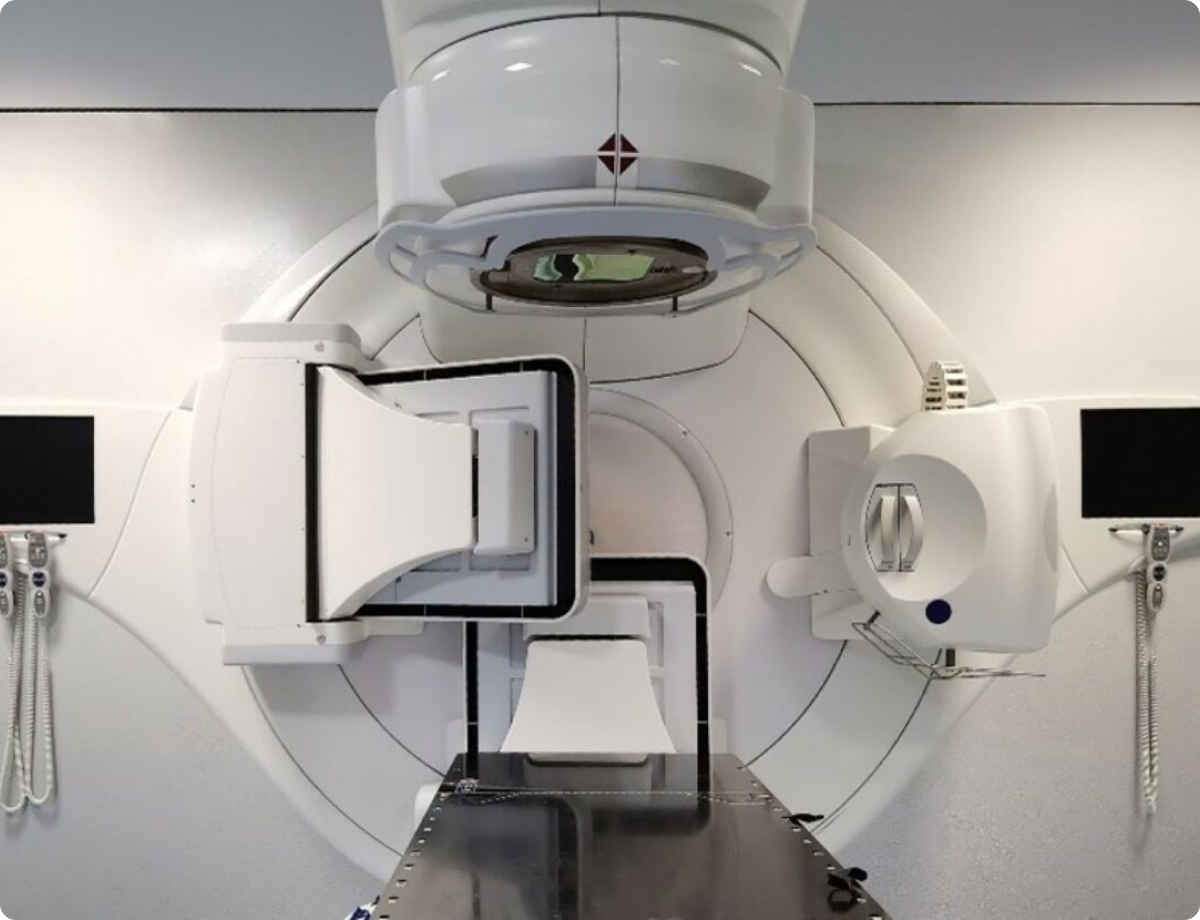
Non-melanoma skin cancers are by far the most common cancers in the UK, and the great majority are very treatable. They develop in the outer layers of the skin, usually on areas that have had the most sun over a lifetime. This includes the face, nose, ears, scalp, neck, hands and forearms.
Nearly all of them fall into two types: basal cell carcinoma and squamous cell carcinoma. They behave differently from one another, which is why getting the diagnosis right matters before deciding on treatment.
I specialise in the treatment of non-melanoma skin cancer, offering private treatment options through the Clatterbridge Private Clinic that give patients greater access to the latest treatment technologies, one-to-one care and a tailored treatment plan best suited to your specific condition and lifestyle. Private treatment offers more flexibility and more say over your care, and if you choose to come to me, you’ll see me throughout the entire process.
Basal cell carcinoma (BCC)
Basal cell carcinoma is the most common skin cancer of all. It grows slowly and it very rarely spreads elsewhere in the body, which is genuinely reassuring news if it’s what you’ve been diagnosed with.
What it does do, if it’s left alone, is grow steadily outwards and downwards into the surrounding tissue. On the face in particular, around the nose, eyelids or ears, that can become a problem, which is why treating it sooner rather than later is usually the sensible course.
Squamous cell carcinoma (SCC)
Squamous cell carcinoma is the second most common type. It tends to grow more quickly than a BCC, and while most are straightforward to treat, a small proportion can spread to nearby lymph nodes if left.
That means SCCs are usually treated more promptly, and depending on where it is and what the biopsy shows, we sometimes need to check the surrounding area as well as the lesion itself.
Signs to look out for
Skin cancers can look like a lot of very ordinary things, which is exactly why they’re often ignored. The changes worth having checked include:
- a sore, spot or ulcer that hasn’t healed after four weeks
- an area that bleeds, scabs over, then breaks down again
- a small pearly or waxy lump, sometimes with tiny visible blood vessels
- a flat, scaly, red or pink patch
- a firm, crusted or tender lump that’s growing
- any patch of skin that’s changing and you can’t explain why
Most of these turn out to be harmless. Any unusual symptoms are worth getting checked, in particular a lesion that doesn’t heal, as skin cancers found early are almost always simpler to treat.
Diagnosis and treatment
Diagnosis usually starts with an examination of the skin, often with a dermatoscope, followed by a biopsy where a small sample, or sometimes removal of the whole lesion is taken to confirm exactly what it is. For larger or deeper cancers a scan is occasionally needed.
Surgery to remove the cancer is the most common treatment for non-melanoma skin cancer, and for many people it’s the right one. That’s carried out by a surgeon rather than by me, where surgery is needed, patients are referred on to trusted colleagues in the region, and can come back to the clinic afterwards if further treatment is required. Dermatology colleagues also use treatments such as cryotherapy, curettage, creams and photodynamic therapy for some early lesions.
Radiotherapy is the part I provide and specialise in, and it’s a well-established alternative treatment for non-melanoma skin cancer. It’s often considered where the cancer sits somewhere surgery would be difficult or leave a poor cosmetic result, such as the nose, ear, eyelid or lip, where an operation isn’t advisable for other health reasons, or where someone would simply rather not have surgery. It’s also used after surgery in certain cases, where the pathology suggests a higher risk of the cancer returning.
If you’ve been told surgery is the only option, or you’ve been offered an operation on your face and you’re uneasy about it, that’s worth a conversation. Seeing me privately means we can look properly at whether radiotherapy would suit your particular cancer, and I can arrange that quickly rather than adding another wait to the process. If surgery really is the better route, I’ll tell you, but you’ll have had the alternative explained before you commit to anything.
Radiotherapy for melanoma, Liverpool and Wirral
Melanoma is less common than BCC and SCC, but it’s the type most likely to spread, and that’s why it’s taken so seriously and needs to be treated promptly.
The important thing to hold onto is that melanoma found early is very often curable. Most people diagnosed with an early melanoma need nothing more than surgery. However, for those with melanoma that is more advanced, I specialise in radiotherapy treatment, which I can provide to private patients through the Clatterbridge Private Clinic in Liverpool or Wirral.
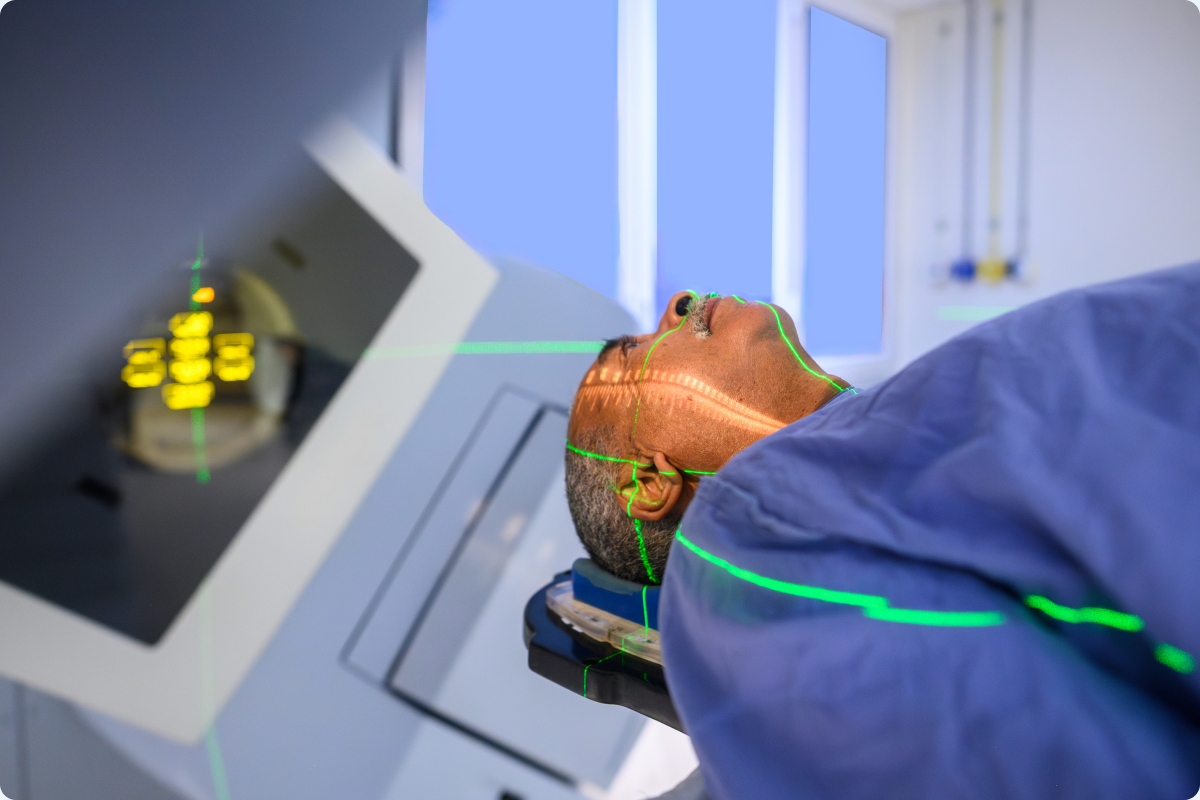
What is melanoma?
Melanoma develops from melanocytes, the cells that give skin its pigment. Most melanomas start as a new, abnormal-looking mole or mark on the skin, usually a dark area, although they can be more than one colour. Others develop from a mole you already have that changes over time.
Most melanomas are related to ultraviolet exposure, particularly episodes of sunburn, but they can also appear on skin that has had very little sun: the soles of the feet, under a nail, or on areas usually covered up.
Signs to look out for — the ABCDE guide
The ABCDE guide is a useful way of checking a mole or mark:
- A — Asymmetry: one half doesn’t match the other
- B — Border: the edges are uneven, blurred or ragged
- C — Colour: more than one shade, or an uneven mix of brown, black, red or pink
- D — Diameter: larger than about 6mm, or getting bigger
- E — Evolving: it’s changing in size, shape, colour or feel
It’s also worth acting on a mole that starts to itch, bleed or become crusty, a new pigmented mark appearing in adulthood, a dark streak under a fingernail or toenail, or a mole that simply looks different from all your others.
If something has changed, you should definitely get it checked out. It’s a quick thing to check, and it’s much better to be told it’s nothing than to wait and wonder. The earlier it is caught, the higher the chance of successful treatment.
Diagnosis and treatment
Melanoma is diagnosed by removing the whole lesion and examining it under the microscope. The report tells us how deep it has grown and other features that indicate how it’s likely to behave. Depending on those findings, further surgery may be recommended to take a wider margin of skin, along with a sentinel lymph node biopsy to check whether any cells have travelled to the nearest lymph nodes. Scans are sometimes arranged to complete the picture.
Surgery is the main treatment for melanoma, and for early disease it’s usually all that’s needed. Where melanoma is more advanced, immunotherapy and targeted drug treatments have transformed what’s possible over the last decade, and these form part of specialist melanoma care.
Radiotherapy has a more selective role in melanoma, and that’s the part I can help with. It may be used after surgery to the lymph nodes where there’s a higher risk of the cancer returning locally, for certain melanomas of the face, where surgery would mean removing a large area of skin, and to control symptoms if melanoma has spread. If radiotherapy is worth considering in your case, I’ll explain exactly where it fits alongside everything else.
Melanoma moves quickly through the system for good reason, but the waiting is still hard, and people often feel decisions are being made around them rather than with them. If you’d like your diagnosis and your plan gone through properly by a consultant with time to do it, or you want a second opinion on what you’ve been offered, that’s something a private appointment can give you within days. Seeing me privately doesn’t affect your NHS care, and I’ll work alongside your existing team.
Specialist in radiotherapy treatments for skin cancer
Radiotherapy is one of the oldest and best-established treatments for skin cancer, and it remains an excellent option for the right patient. It uses carefully targeted radiation to destroy cancer cells in the skin, and because there’s no cutting, no anaesthetic and nothing to recover from, it suits a lot of people for whom an operation would be difficult.
It’s particularly worth considering where a cancer sits somewhere surgery would leave a poor result or be technically hard, such as the tip or side of the nose, an eyelid, an ear, the lip, where you’re taking blood-thinning medication, where other health conditions make an operation risky, or where the area involved is large. It’s also used after surgery where there is a higher chance of the cancer coming back.
Treatment is given as a course of short outpatient appointments. You lie or sit still for a few minutes, you feel nothing at the time, and you go home straight afterwards.
What I can offer is a choice of techniques rather than one. Not every skin cancer suits the same approach, and matching the technique to the site, the depth and the shape of the area being treated is a large part of getting a good result.
Orthovoltage
Low-energy X-rays that deliver their dose to the skin surface and the tissue immediately beneath it, then fall away quickly. That makes orthovoltage well suited to basal cell and squamous cell carcinomas sitting at or near the surface, treating the cancer while sparing what lies underneath.
Electron beam
Electron beams travel to a set depth in the tissue and then stop. This is useful for slightly thicker lesions, and for areas where what lies beneath, such as the eye, the skull, or the lung, needs protecting. The beam can also be shaped to fit an irregular area of skin.
External beam radiotherapy
Standard external beam radiotherapy, delivered by a machine that moves around you, is used for larger or deeper skin cancers, for treating lymph node areas, and after surgery in higher-risk cases. Modern planning techniques allow the dose to be shaped closely around the area being treated.
Skin brachytherapy
Here the radiation source is brought right up to the skin, held in place by a custom applicator or mould shaped to fit you. Because it sits directly on the surface, it conforms well to curved and awkward areas such as the nose, ear or scalp, and the dose falls away rapidly beyond the target.
Why patients choose private skin cancer treatment
Most people I see privately aren’t unhappy with the NHS. They’ve usually had a diagnosis, been given one option, and want to understand it better before going ahead, or they want it dealt with sooner. Private care gives you both.
The same consultant, every time
From your first appointment through treatment and follow-up, you see me. You won’t repeat your history to a different doctor at each visit or be handed between clinicians.
Quick access to an appointment
The gap between being told you have a skin cancer and finding out what happens next is the part people find hardest. Private patients can be seen quickly, and video consultations are available if you’d rather start that way.
Time to understand your options
A proper conversation about surgery versus radiotherapy, what each would mean for the appearance of the treated area, and what’s involved day to day. You should leave understanding the reasoning, not just the recommendation.
A choice of radiotherapy techniques
Orthovoltage, electron beam, external beam and skin brachytherapy, I specialise in them all, so the technique can be matched to your rather than to what happens to be on hand.
Treatment at one of the UK’s leading cancer centres
I treat at the Clatterbridge Private Clinic in Liverpool and the Wirral, part of The Clatterbridge Cancer Centre. That means access to equipment, specialist radiographers and multidisciplinary expertise that isn’t available everywhere, in a private setting.
A second opinion, without awkwardness
Wanting to check a plan before committing to it is sensible, not disloyal. I see a lot of people for exactly this, and many go back to their NHS team reassured.
Your NHS care continues
Seeing me privately doesn’t affect your entitlement to NHS treatment, and I’ll share information with your existing team so your care stays joined up.
What to expect
From your first email through to follow-up, here is how a private consultation with me works.
01
Get in touch or arrange a referral
Email me with a little about your diagnosis and a member of my team will come back to you. Most people with a skin cancer are diagnosed by a dermatologist first and referred on to me at the Clatterbridge Private Clinic, and I also welcome referrals from GPs and other consultants.
02
Your consultation
We’ll go through your diagnosis, your biopsy results and any scans, and I’ll examine the area. I’ll want to understand your circumstances too, your general health, any medication you’re on, and what matters to you about how the treated area will look and feel afterwards.
03
A treatment plan built around you
I’ll set out the options genuinely worth considering. If radiotherapy is right for you, I’ll recommend the technique that suits your particular cancer and explain why. You’ll be part of that decision.
04
Treatment
If you go ahead, I’ll plan your treatment and explain what each appointment involves before it happens. Sessions are short, and most people carry on with their normal day afterwards.
05
Ongoing review and follow-up
I’ll see you after treatment to check how the area is healing and how you’re getting on. Skin needs a little time to settle, and I’ll keep reviewing you so that anything new can be picked up early.
Private medical insurance and self-funding options available
I see both self-funding patients and patients covered by private medical insurance, and I’m recognised by all the major UK insurers, including Bupa, Axa Health, Aviva, WPA and Vitality.
If you’re insured it is worth checking your policy and speaking to your provider before your first appointment, as cover for cancer treatment varies between policies. The private patient liaison team at the Clatterbridge Private Clinic can speak to insurers on your behalf to arrange payment for treatment too, so you don’t have to worry about it. If you’re paying for your own treatment, I’ll be clear with you about the costs and the team will go through all details with you.
Either way, get in touch with me today and I’ll help you to understand where you stand.


Get in touch to book a consultation
If you’ve recently been diagnosed with skin cancer, if you’ve been told surgery is the only option and want to understand the alternatives, or if you’d like a second opinion, I’d be happy to review your case and talk you through your options in more detail.
You don’t need to have your questions neatly worked out first, and you don’t need to have decided anything. Send me an email with a little about your situation, and a member of my team will come back to you, explain how a private consultation works and help you with the next steps.
Dr Ian Lampkin
Consultant Clinical Oncologist
Liverpool · Wirral · Manchester
CLINICS
 Clatterbridge Private Clinic, Liverpool
65 Pembroke Place, Liverpool L7 8YA
Clatterbridge Private Clinic, Wirral
Clatterbridge Road, Bebington, Wirral CH63 4JY
Theralife Clinics – Manchester
Second Floor, Alderley Edge Medical Centre, Talbot Road, Alderley Edge, Cheshire, SK9 7HR
PROFESSIONAL
MBChB, MRCP, FRCR
Royal College of Radiologists
UK Imaging and Oncology Working Party
NICE committee for Prostate Cancer Diagnosis and Management
FRCR Part 1 Examination Board
© 2026 Dr Ian Lampkin. All rights reserved.
Registered with the General Medical Council, no. 7148965